
Collaborative Specialization in One Health
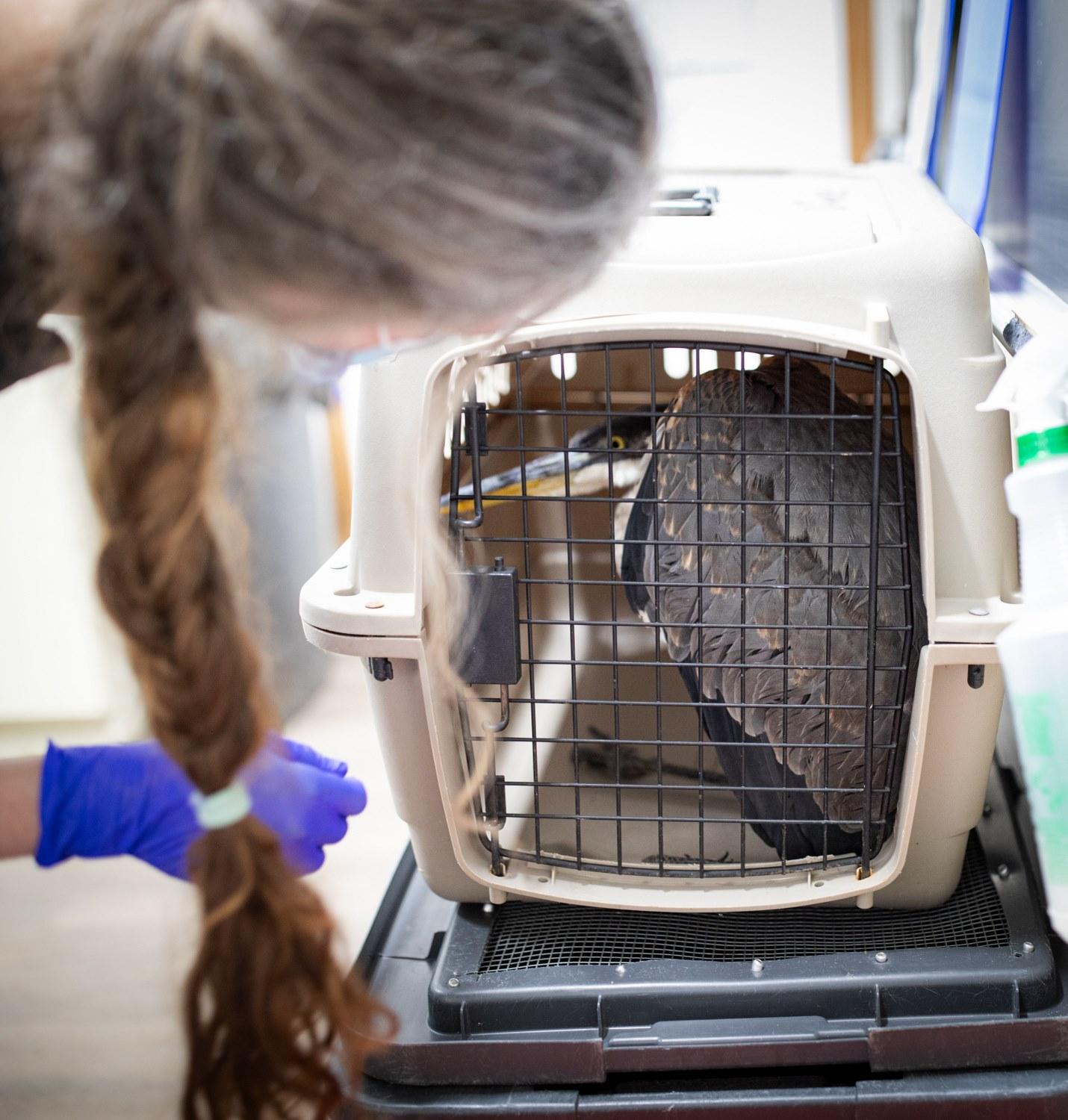
Our world is faced with many complex health challenges in which human, animal and environmental health are intertwined.
The Collaborative Specialization in One Health prepares future leaders for the complex challenges at the confluence of human, animal, and environmental health, working across disciplinary boundaries, conducting multidisciplinary research, mobilizing knowledge, and informing policy. This specialization is ideal for students interested in complex health challenges, such as:
- Climate change and environmental degradation
- Emerging infectious diseases
- Antimicrobial resistance
- Food safety and security
- Health inequalities
Program Details
Doctoral and master’s (thesis or coursework and major research paper) students wishing to undertake graduate studies with an emphasis on One Health will be admitted by a participating department and will register in both the participating department and in the collaborative specialization.
Students must complete two required courses (ONEH*6000 and ONEH*6100/6200), as well as successfully conduct research and defend a thesis that applies a One Health approach. Additional requirements will be specific to each student’s primary program.
Participating Departments
- Animal Biosciences (MSc, PhD)
- Biomedical Sciences (MSc, PhD)
- Clinical Studies (MSc)
- Computational Sciences (PhD)
- Computer Science (MSc, PhD)
- Engineering (MEng*, MASc, PhD)
- Environmental Sciences (MES*, MSc, PhD)
- Food Science (MSc, PhD)
- Family Relations and Applied Nutrition (MSc in AHN & FRHD only, PhD)
- Geography (MA, MSc, PhD)
- History (MA*, PhD)
- Human Health Sciences (MSc, PhD)
- Integrative Biology (MSc, PhD)
- Mathematics and Statistics (MSc, PhD)
- Molecular and Cellular Biology (MSc, PhD)
- Pathobiology (MSc, PhD)
- Political Science (MA*, PhD)
- Population Medicine (MSc, PhD)
- Philosophy (MA, PhD)
- Public Issues Anthropology (MA)
- Rural Planning and Development (MSc*)
*Only thesis-based master’s programs or those with a major research project are eligible.
Students and Alumni

My PhD research aimed to create an evaluation framework for One Health (OH) educational programs in Canada, which included a focus on the new Bachelor of One Health degree program at the University of Guelph. This research also involved understanding the utility of the OH competencies, upon which these programs were based, for employment roles and responsibilities focused on climate change mitigation, adaptation, and resilience.

My research aims to use a One Health approach to identify and map the transmission pathways of dominant zoonotic pathogens (water-borne and fecal-borne) causing disease in people, domestic animals, and lemurs (endangered species) sharing the same environment in Ankarafantsika National Park, Madagascar.

My research investigated how humans and lemurs sharing a landscape influences the behaviour, habitat, and parasitic load of lemurs in a Malagasy forest community. During my master’s, I published “Primate conservation: A public issue?," which is a commentary about the need for interdisciplinary collaboration in primate conservation.

My research is focused on understanding risks associated with leptospirosis, a neglected and climate-sensitive zoonotic disease with significant impacts on both animal and human health. Using a One Health approach, I am exploring how social, environmental, and climatic factors influence current and future risk of canine leptospirosis in Canada.

My research aims to explore the potential for disease spread on Ontario sheep and goat farms by identifying perceptions and barriers hindering the implementation of biosecurity measures. This study will be looked at from a One Health lens, exploring human, animal, and environmental factors that influence biosecurity use.

My research focuses on both epidemiological and ecological aspects of Leishmania spp. and their sand fly vectors, both in the context of Canadian canine importation, and climate change. I hope to provide more information regarding the current state of canine leishmaniosis cases in Canada and inform future risk of this zoonotic disease.

I’m collecting and analyzing environmental antimicrobial resistance data with different One Health and modelling approaches.

Companion animals remain an underappreciated source of zoonoses, and the potential for zoonotic transmission is compounded by climate change. My work aims to describe climate-sensitive companion animal zoonoses with an emphasis on using advanced analytics to ascertain the risk of current and future climate trends on Lyme disease in Ontario, Canada.

The central aim of my doctoral thesis was to use a One Health approach to address critical knowledge gaps surrounding our understanding of plastic pollution in Canada, with a focus on health impacts on birds and freshwater and terrestrial ecosystems.

Admissions
Prospective students can apply at the time of their application to the University of Guelph. This process has two stages. First, prospective students need to apply to their primary program of interest and identify that they are also interested in the collaborative specialization as a focus. They must upload a signed Declaration of Commitment Form with their application. If the student is admitted to the primary program, the second stage is admission to the collaborative specialization.
Upon acceptance, all enrolled students will be required to submit a Letter of Intent briefly outlining their interest in One Health and explaining how their area of research will apply a One Health approach. The letter must be submitted to the graduate program coordinator by Nov. 1 of the first year of study.
Current students can apply to collaborative specialization while in program, as long as they have sufficient time to complete all the requirements. To apply, students are required to submit a Letter of Intent briefly outlining their interest in One Health and explaining how their area of research will apply a One Health approach. The letter must be submitted to the graduate program coordinator.
Contact Us
Dr. Jane Parmley, Graduate Program Coordinator
519-824-4120 ext 54595
jparmley@uoguelph.ca