News
Canada’s Food University Coming to Royal Agricultural Winter Fair
At U of G’s exhibit, attendees can engage with the University’s full continuum of discoveries and valuable partnerships with the agriculture industry.
From new inventions to research successes in plant breeding, animal care, honey bee health, food security and everything in between, visitors can learn how U of G researchers are protecting our trees, for instance, or taking care of pollinators.
Other highlights include made-in-Guelph inventions that are building a more resilient agriculture system and ensuring that every Canadian has access to safe and healthy food.
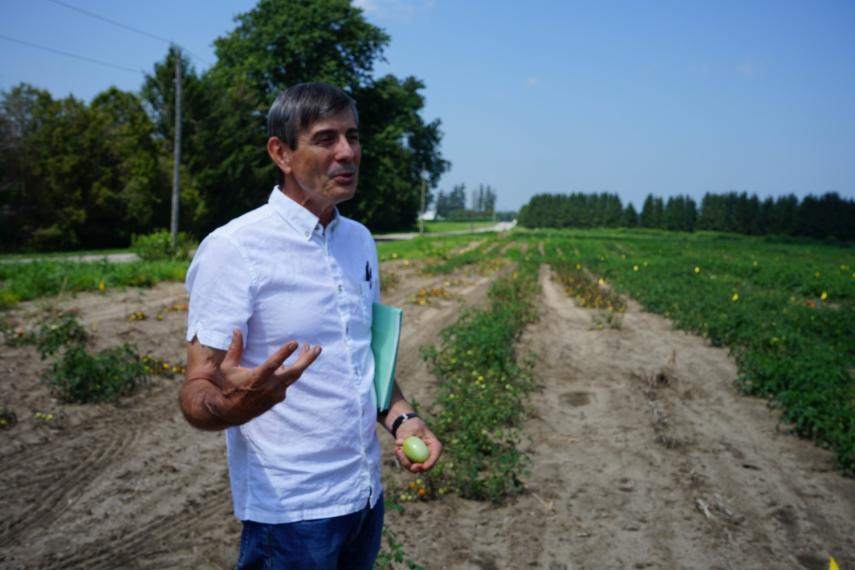
Dry Beans Used in Breeding Trials to be Sent to Guelph Food Bank
One U of G bean breeder grows nearly 100,000 plants each year at the Ontario Crops Research Centre in Elora. But, only a few thousand of those plants are needed for U of G’s breeding programs.
Dr. Rozita Dara Explains the "Slow" Adoption of AI in Agri-Food
In this Fort Frances Times story, University of Guelph professor Dr. Rozita Dara explains some of the hurdles agriculture is facing with respect to the adoption of artificial intelligence (AI). Read the story: Researchers look to help farmers with the adoption of AI
Research Centre Trial Data Yields Practical Results for Northern Ontario Farmers
Harsher winters, a shorter growing season and variable frost are some of the reasons that data sourced locally important for Northern Ontario farmers. Melinda Drummond, cropping systems research technician at the Ontario Crops Research Centre in New Liskeard, explains the importance of local data from the site to Northern Ontario Business.
Dr. Youbin Zheng Leads U of G Team in Race to Grow Fruit Year-Round
The Homegrown Innovation Challenge, sponsored by the Weston Family Foundation. has a goal of making Canada more food resilient.
The University of Guelph team is working with Agriculture and Agri-Food Canada researchers on a hybrid greenhouse-vertical farm system that can grow strawberries all year long while producing zero greenhouse gas emissions.
Living Lab Initiative Brings Together Farmers, Researchers and Agri-Experts to Test Sustainable Nitrogen Practices
Dr. Claudia Wagner-Riddle, professor in U of G’s Ontario Agricultural College, is leading the project, which compares grazed and ungrazed cover crops within a cash crop rotation while looking to enhance soil health and reduce the need for inputs. With the project in the early stages, Wagner-Riddle she says her team is looking towards a long-term goal of developing “new practical knowledge that will help the dairy sector to move towards net-zero goals while also being a thriving sector.”
Dr. Keith Warriner on Feed Science Podcast
U of G food safety researcher Dr. Keith Warriner discusses a One Health approach to food pathogens in livestock feed and feed meals, and the innovative steps being taken to make production safer and more sustainable.
Listen to the episode, hosted by Dr. Carlos Campabadal from Kansas State University: Dr. Keith Warriner: One Health & Feed Safety | Ep. 120
University and Industry Experts Emphasize Trust, Relationships and Farmer Input for Successful KTT
U of G researchers Dr. Tina Widowski, Dr. Alexandra Harlander and Dr. Jennifer Ellis shared examples of partnerships that fills knowledge gaps for industry at the Livestock Research and Innovation Corporation’s (LRIC) annual Getting Research into Practice (GRIP)’s “Benchtop to Barnyard” roundtable in Elora, Sept. 30.
Read the story in Farmtario: Research meets reality: Farmers and scientists find solutions together
Dr. Adrian Correndo's Recommendations for Soil Sampling: Farmtario
Consistency in sample depth – 15 centimetres (six inches) for nitrogen, phosphorus, and potassium – as well as when samples are taken – whether in spring or autumn – is one such recommendation from Correndo, a professor in plant agriculture at U of G.
Read the story in Farmtario: Proactive soil sampling brings fertility cost savings